

Veteran Voices Newsletter

Issue 17 • November 30, 2025
"Failure feels final until it becomes fuel." — Frank McGaha
Table of Contents
From Navy Dreams To Police Coaching: 2
How Mentors, Mindset, And Grit Shape A Law Enforcement Career 2
TL;DR
Frank McGaha, a Navy veteran who was medically sidelined from BUD/S, learned to treat failure as fuel. His journey into police coaching highlights a crucial problem: military skills often don't translate into civilian jobs. He overcame this by proactively gaining a practical, civilian-recognized credential (EMT) that immediately opened doors.
Key takeaways for veterans considering law enforcement:
- Don't wait: Proactively stack credentials like EMT or tactical medicine.
- The Psych eval is key: Maturity, self-awareness, and precise articulation are more important than bravado—the psych exam is now the top disqualifier.
- Be meticulous: Build a complete personal history file now, and never lie in the application process.
- Find purpose: Your "mission" is what endures when roles and titles change.
From Navy Dreams To Police Coaching:
How Mentors, Mindset, And Grit Shape A Law Enforcement Career
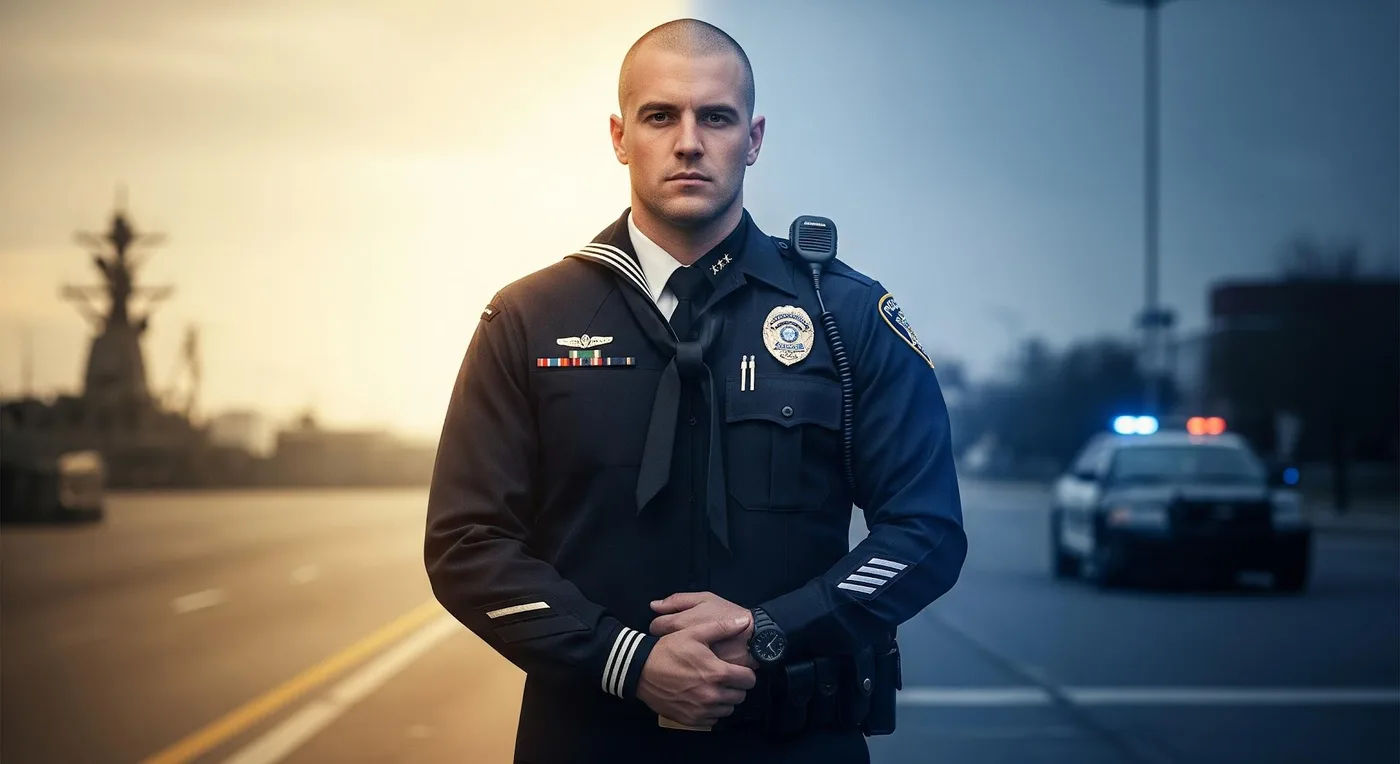
Failure feels final until it becomes fuel. Frank McGaha’s story begins with a hard stop: stress fractures in BUD/S, a young sailor who pushed through pain until his body said no. That moment reframed failure as a data point rather than a verdict. He saw how often people quit before they truly fail, and how staying the course—calm breathing, steady discipline, relentless reps—can turn breakdown into bedrock.
With mentors who told him blunt truths, he pivoted into Naval Air Crew, deployed, learned the value of listening, and captured a lesson many never absorb: most success is persistence dressed in patience. That mindset carried into transition, where the “system” didn’t translate his skills, but a single decision—getting EMT—opened the door that others missed.
The jump from service to civilian life revealed a brutal gap between military credentials and hiring realities. Transition classes offered broad advice but missed the gritty details: VA registration, GI Bill timing, federal resumes, and street-level employability. Frank’s EMT certification became decisive, turning a competitive ranger slot his way because it met an immediate community need. The takeaway is practical and repeatable: don’t wait—stack relevant skills early.
If you’re aiming at law enforcement, learn the mission’s true demands. Medical calls outnumber cinematic takedowns; tactical medicine builds credibility and responsibility. Veterans bring teamwork, rank fluency, and a “we before me” mindset. That plays well in policing, which mirrors the paramilitary structure and depends on trust. But the civilian side changes the rules—respect isn’t automatic, and authority is bounded by constitutional constraints, not just chain of command.
Injuries eventually forced another pivot. A split-second of losing sight of a partner crystallized the stakes: fitness is ethics when tools escalate because capability has declined. Choosing to leave patrol wasn’t quitting; it was protecting the community, the profession, and teammates. That move led to instruction and, later, coaching candidates through the labyrinth of hiring.
Here the terrain is more nuanced than most expect. Disqualifiers like felonies, current substance use, severe credit issues, and dishonorable discharges center on one reality: firearms eligibility and trust. Beyond that, articulation matters more than perfection. Many “squeaky clean” candidates overthink trivia and hide small mistakes, while others nearly confess to felonies by misreading legal terms in background packets. The psych is now the top disqualifier, and it rewards maturity, self-awareness, and precise language, not bravado.
Mentorship runs through every turning point. Some mentors sharpen your edge; others show what not to become. The best advice is stark and serviceable: do your job unless it’s dangerous, dumb, or illegal. Frank built his company around that ethic, pushing out practical content that demystifies hiring and elevates standards. His core message is that policing remains an honorable, necessary profession—and that accountability is the bridge to public trust. He’d rather let ten guilty people walk than jail one innocent person. That principle aligns with constitutional policing and builds the kind of officers communities want: calm, capable, and deeply trained.
For veterans considering the badge, start now. Build a complete personal history file before you apply: addresses, neighbors, supervisors, landlords, references, and credit records. Identify your top three departments instead of shotgunning applications; commitment signals maturity and reduces churn.
Train for the PT, study for the written, rehearse for the board, and take the psych seriously. Practice articulation: own your past, explain growth, and stay consistent across forms, interviews, and polygraphs. Don’t lie—departments uncover it and careers implode years later.
Consider credentials that compound: EMT, tactical medicine, crisis intervention, de-escalation, and report writing. Most of all, reconnect with purpose. Policing isn’t who you are; it’s what you do for others. Purpose endures when roles change, injuries come, and titles pass. Build on that, and your next mission can be your best work yet..

Commentary
What strikes me most about Frank McGaha’s story is the sheer disconnect he experienced between his military training and the civilian hiring process. He touches on a brutal reality: the system often fails to translate the hard-earned skills and discipline of a veteran into street-level employability.
The official transition classes offer broad advice, but as Frank found, getting his EMT certification was the small, practical decision that made him immediately valuable and opened a crucial door.
For every veteran reading this, the message is clear: do not wait for the system to catch up. Proactively stack practical, civilian-recognized credentials like EMT, a trade certification, or crisis intervention training. These skills are your self-defense against the transition gap, allowing you to create your own immediate value while the rest of your paperwork catches up.
This isn't just about getting a job; it’s about reconnecting with a sense of mission, which, as Frank points out, is what truly endures. Policing isn't just a role; it’s what you do for others.
Our work at Veteran Voices is founded on the belief that a successful transition is the best prevention against homelessness and despair. We want to help veterans find their next mission, one that honors their past while securing their future. Frank’s journey is a powerful reminder that purpose and preparation, not just a discharge paper, are the bedrock of a thriving civilian life.
As always, if you have resources or a story to share, please write to us at SITREP@VeteranVoices.us or our physical address at the end of this newsletter.
Thank you for reading!

Veteran Voices: Mission
To empower veterans to thrive in civilian life by providing critical resources and support and preventing homelessness through proactive intervention.
We're committed to honoring our heroes' service by ensuring their successful transition, one veteran at a time
Veteran homelessness is a significant issue that is challenging to solve because of the many emotional and psychological factors that contribute to it. We believe that the best approach is to identify and provide resources that assist veterans in making a smooth transition into civilian life. This will help to prevent veterans from becoming homeless in the first place, following the old adage that "an ounce of prevention is worth a pound of cure."
How You Can Help
If you have resources available to help veterans or have a story of your own to share, we’d love to hear from you! You can contact us at SITREP@VeteranVoices.us.

Research and writing assistance provided by BuzzSprout and Gemini.


Veteran Voices
A Service of Pearl Lane, LLC
12128 N Division St #1520
Spokane, WA, 99218
Copyright © 2025 Pearl Lane, LLC
www.VeteranVoices.us
SITREP@VeteranVoices.us
G-17EXCCFBDE
- -